
In this article, we will learn about python fundamentals like variables and data types concepts that are required to start your journey in python, before we see why python fundamental is important in python.
Let’s have a brief introduction to python.
Python is the world’s fastest-growing and most popular programming language, not just among software engineers, but also among mathematicians, data analysts, networking engineers, scientists even kids! Because it’s a user-friendly programming language.
How to set up a python environment through ANACONDA?
Anaconda is a python-specific flat form because most people use it because it is user-friendly. There are some benefits to using Anaconda.
- It is in-built with Jupiter Notebook and Spider IDEs.
- It has more than 1500 python data packages.
- It has tools to easily collect data using machine learning and AI.
- Extremely easy and fast to set up and get started.
- It will manage libraries, dependencies, and environments.
Note: Jupyter Notebook is an open-source web application that allows a user, scientific researcher, scholar, or analyst to create and share a document called the Notebook, containing live code, documentation, graphs, plots, and visualizations.
Let’s start with the fundamentals of Pythons.
Variables and Data type.
We will start with variable and data types because they play an important role in computer programmers writing flexible programs.
Variables :
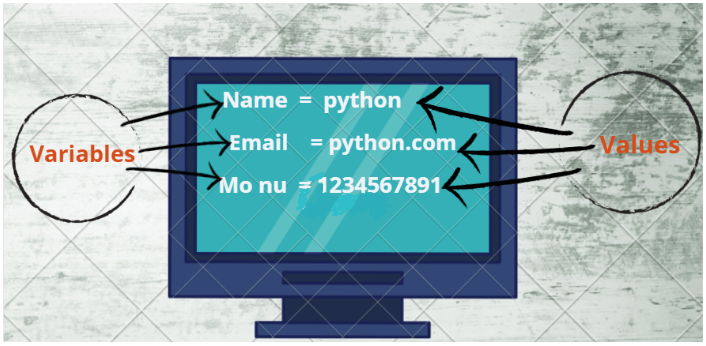
Variables are the container for storing the data values and they may change in the future, according to the specifications.
- The variable name includes alpha-numeric characters and underscores
- A variable name cannot start with a number and can only contain alpha-numeric characters (A-z, 0–9, and _).
Data type :
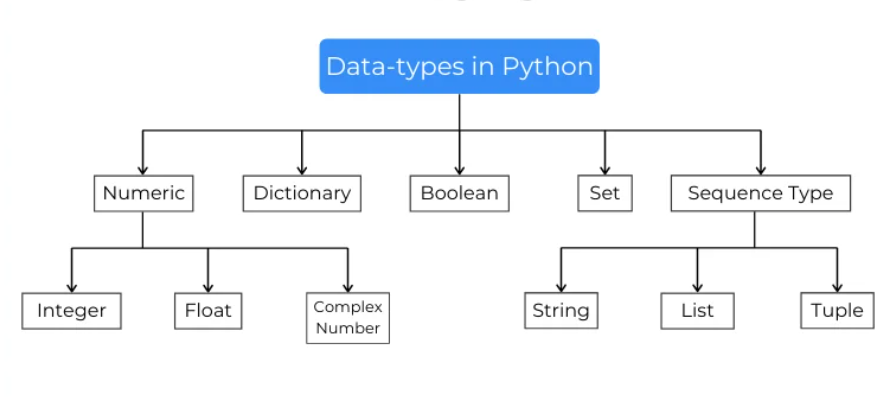
Data types are the classification or categorization of data items. they represent what kind of values tell what operation is performed on the particular data. Every value in python has a data type. There are multiple data types of python.
Most basic data types built into python are:
- Numeric
- String
- Boolean
- Others are part of the collections: tuples, lists dictionaries and sets, mutable and immutable objects.
- Mutable objects can be modified: Lists, dictionaries, and sets.
- Immutable objects means cannot be modified: Numbers, strings, tuples.
Numeric :
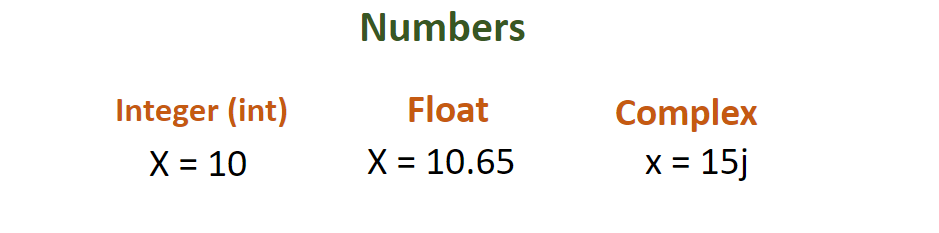
In python, numeric data represents the data that has a numeric value it can be a number, float number an even a complex number. These values are redefined as integers, flotes, and complex classes.
Strings :
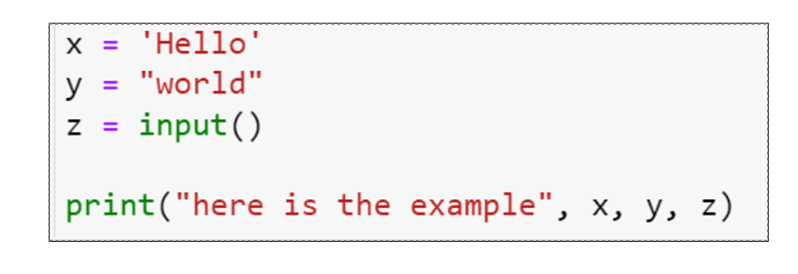
The string type in python is represented by the str. class. Python does not have a character data type. A single character is also considered as a string with a length of lines.
We declare the string value inside the single quotes or double-quotes. Example ‘Hello’ or “Hello”.
List [ ] :
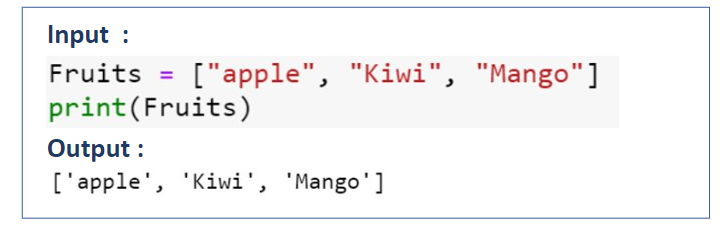
List one of the most useful data types in python and it is very flexible. It is a collection of items that are ordered and mutable. All the items in the list do not need to be of the same type, which makes it one of the most powerful tools in python.
Dictionary:
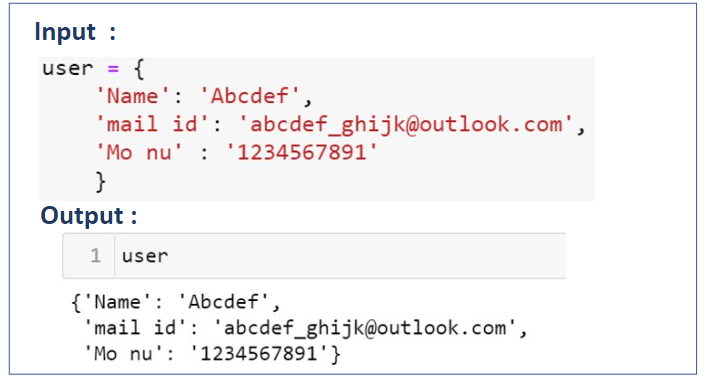
Dictionary in python is an unorder and index collection of values used to store data. In other data types, they hold only a single value as an element, but in the dictionary, they hold a key-value pair. A key value is provided to make it more optimized for retrieving data.
Tuple ( ):
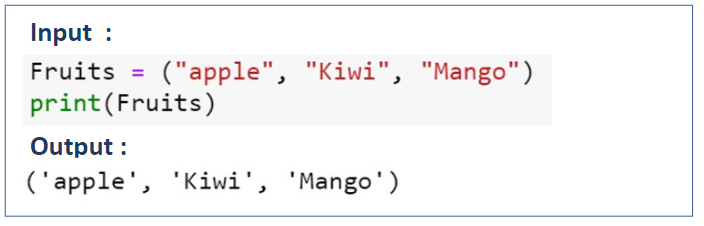
A tuple is an ordered collection of python objects, much like a list. The sequence of values stored in a tuple can be any type and they are indexed by integers, which allow the duplicate members. Tuples are used to write and protect the data and are usually faster than lists.
set { } :
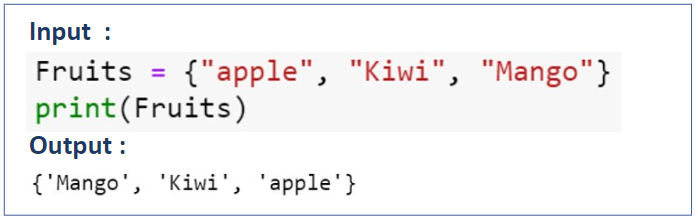
Set is an unorderable collection of data types that are iterable, mutable, and have unique elements. The advantage of using a set is that it has a method for checking whether a specific element is contained in the set and is defined by curly braces with unique values.
Summary
Hopefully, you have understood this overview of this article about Python fundamentals, This will help you get started on your journey to learning python and practice a lot ….Happy Coding. 🙂